Product Buying Guides
Stretch Film Buying Guide for Warehouses and Industrial Packaging
A practical buying guide for procurement, warehouse, logistics, and industrial packaging teams comparing stretch film types, specifications, gauge, load stability, and RFQ requirements.
July 5, 2026
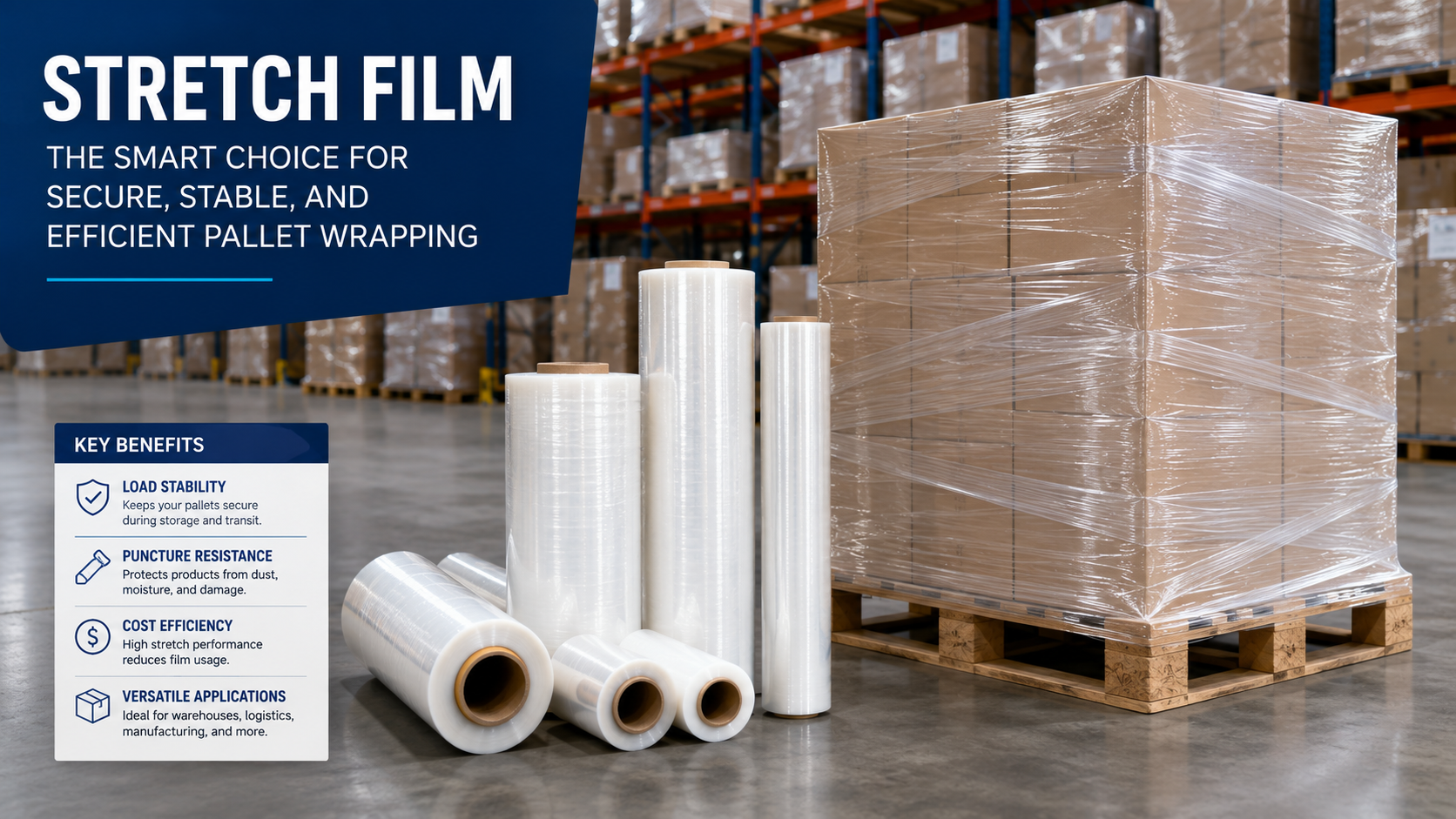
Learn how procurement and warehouse teams can compare hand stretch film, machine stretch film, gauge, load stability, and sourcing requirements for pallet wrapping applications.
Request Sourcing SupportBest for buyers comparing:
- Hand stretch film vs machine stretch film
- Gauge, mil, and micron options
- Pallet wrapping performance
- Warehouse and logistics applications
- RFQ specifications for sourcing
In This Guide
What Is Stretch Film? Common Types Key Specifications How to Choose Common Mistakes RFQ Information FAQStretch film is one of the most common packaging materials used in warehouses, distribution centers, manufacturing plants, and logistics operations. It helps secure palletized goods, reduce load shifting, protect products during handling, and improve shipping stability.
For procurement and supply chain teams, choosing stretch film is not only about price per roll. The right option depends on pallet size, load weight, wrapping method, storage environment, handling process, and expected shipping conditions.
For a process comparison, review the hand versus machine wrapping comparison alongside the specification questions below.
What Is Stretch Film?
Stretch film is a flexible plastic film used to wrap products, cartons, and palletized loads. It is commonly made from LLDPE and is designed to stretch around goods while holding them together through tension and cling.
- Pallet wrapping
- Warehouse storage
- Distribution center handling
- Export packaging
- Manufacturing material movement
- Load stabilization
- Dust and moisture protection
Common Types of Stretch Film
Hand Stretch Film
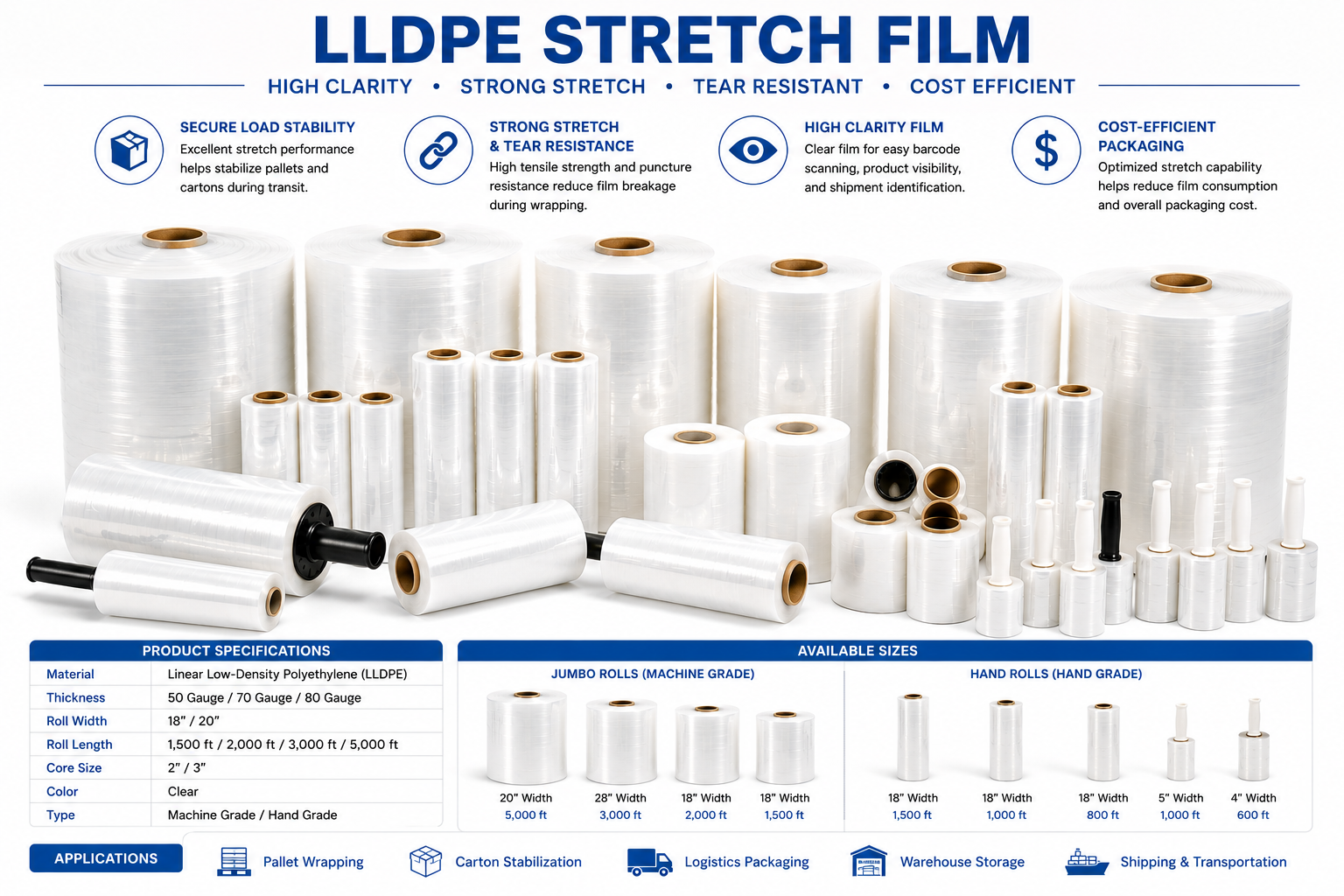
Applied manually by operators using rolls or hand dispensers. Suitable for lower-volume operations, mixed pallet sizes, and flexible warehouse use.
Machine Stretch Film
Designed for semi-automatic or automatic stretch wrapping machines. Suitable for high-volume pallet wrapping and consistent load containment.
Application-Based Selection
The right film depends on pallet size, load weight, wrapping method, storage environment, and handling conditions.
Key Specifications Buyers Should Compare
Film Thickness
Stretch film thickness is commonly measured in gauge, mil, or micron. Thicker film may provide stronger puncture resistance and load stability, while thinner film may reduce material usage when matched correctly to the application.
| Gauge | Approx. Mil | Approx. Micron | Common Use |
|---|---|---|---|
| 50 gauge | 0.50 mil | 12.7 micron | Light-duty loads |
| 60 gauge | 0.60 mil | 15.2 micron | Light to medium loads |
| 70 gauge | 0.70 mil | 17.8 micron | General warehouse use |
| 80 gauge | 0.80 mil | 20.3 micron | Standard pallet wrapping |
| 90 gauge | 0.90 mil | 22.9 micron | Heavier or less stable loads |
Roll Width and Length
Common hand film widths include 12 inches, 15 inches, 18 inches, and 20 inches. Machine film widths often vary depending on the wrapper and film carriage.
Stretch Performance
Stretch performance affects how much the film can elongate during wrapping. Machine films may require specific stretch capability depending on the equipment.
Cling and Load Holding
Cling helps layers stick together. Load holding helps maintain pallet stability during movement and storage.
How to Choose Stretch Film
1. Confirm the Wrapping Method
Start by identifying whether the film will be used manually or with a wrapping machine. Manual operations usually need hand stretch film, while automated or semi-automated lines usually need machine stretch film.
2. Understand the Load
A stable pallet of uniform cartons may need a different film than an irregular load with sharp corners or uneven weight distribution.
3. Review the Handling Environment
Film performance can be affected by warehouse conditions, outdoor exposure, cold storage, humidity, and rough handling.
4. Compare Total Usage, Not Only Roll Price
A cheaper roll may not reduce cost if it requires more wraps per pallet, tears frequently, or causes unstable loads.
Common Sourcing Mistakes
- Choosing only by gauge
- Ignoring machine compatibility
- Not providing load details in the RFQ
- Comparing rolls without checking net weight and yield
Information to Prepare Before Requesting a Quote
- Hand film or machine film
- Required gauge, mil, or micron
- Roll width and length
- Core size
- Pallet size
- Load weight
- Application environment
- Daily or monthly usage
- Target quantity
- Delivery ZIP code
- Photos or reference product links
Related Products
FAQ
What is the most common stretch film gauge for pallets?
80 gauge stretch film is commonly used for general pallet wrapping, but the best option depends on load weight, pallet stability, handling conditions, and wrapping method.
Is hand stretch film the same as machine stretch film?
No. Hand stretch film is designed for manual wrapping, while machine stretch film is designed for stretch wrapping equipment.
How do I reduce stretch film cost?
Compare cost per pallet, not just price per roll. The right film may reduce usage, tearing, rewrapping, product damage, and labor waste.
What information should I send for a stretch film quote?
Send the film type, gauge or micron, roll size, pallet size, load weight, monthly quantity, wrapping method, and delivery requirements.
Need Help Choosing Stretch Film?
Send your pallet size, load weight, wrapping method, target specification, and delivery requirements. Everprosper can help compare suitable stretch film options for your warehouse, manufacturing, or logistics operation.
Send Your Requirements