Product Buying Guides
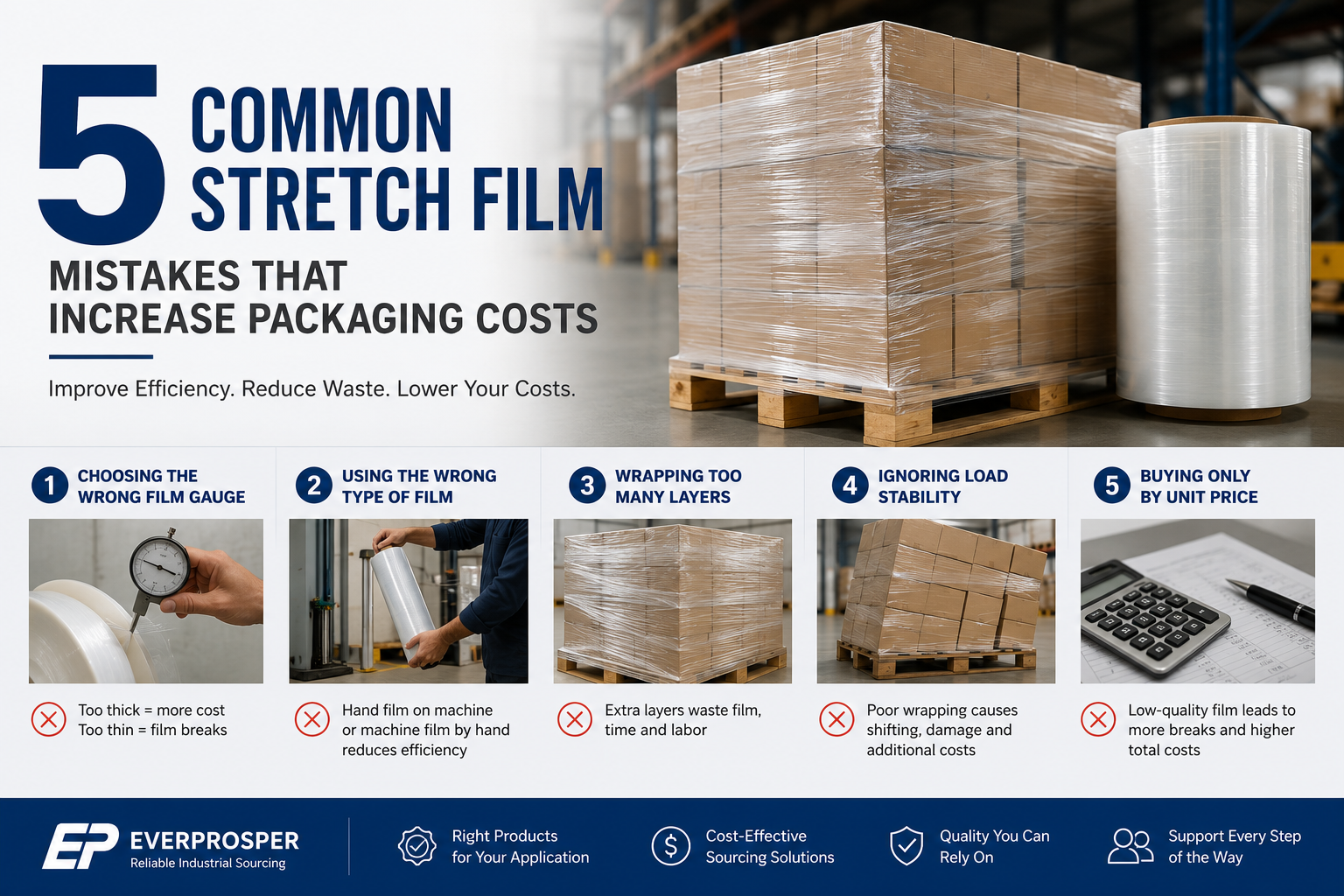
5 Common Stretch Film Mistakes That Increase Packaging Costs
Stretch film is one of the most widely used packaging materials in warehouses and manufacturing facilities. However, many companies unknowingly increase packaging costs due to improper film selection, incorrect wrapping techniques, and excessive material usage. In this guide, we explain five common mistakes and how to avoid them.
July 2, 2026
Is your warehouse choosing stretch film by roll price, or by what the finished pallet requires? Review the load, wrapping method and receiving conditions before changing the film specification.
The five mistakes below can make quotations difficult to compare or leave a wrapping process poorly matched to the job. Use them to prepare a clearer RFQ and an application review, not as a promise of lower cost or damage-free shipments.
1. Choosing Film by Gauge Alone
Thickness is one input, not a complete selection rule. A specification that omits pallet dimensions, load shape, packed weight or contact points does not explain what the film must do.
Record the required gauge or micron value with the wrapping method and load details. Ask the supplier to review the proposed film against the application rather than assuming that thicker film is always better or thinner film always costs less in use.
2. Overlooking the Wrapping Method
Identify whether operators wrap by hand or use a pallet wrapper. For machine wrapping, provide the equipment model and relevant carriage or operating requirements. For manual work, describe the workstation and how the pallet is handled.
Compare stretch film options against that process. Confirm roll dimensions, core compatibility and available product documentation before approving a substitution.
3. Changing Layers Without Reviewing the Process
Adding or removing layers changes the wrapping arrangement. It should not be treated as an automatic way to improve protection or reduce material use.
Record the existing wrapping pattern, overlap, base coverage and relevant equipment settings. Agree how a proposed change will be evaluated with representative loads and the responsible operations team. Keep the limits of any trial in the review record.
4. Ignoring the Complete Pallet Load
Uneven cartons, overhang, sharp contact points and an unstable load pattern may require attention beyond film selection. A film change alone may not resolve those conditions.
Share load photographs, pallet dimensions, weight distribution and the expected handling route. Identify where cartons or products move, and review the complete pallet configuration before changing the wrapping specification.
5. Comparing Roll Price Without Comparing Usage
Two rolls are not directly comparable if usable length, specification or application differs. A lower quoted roll price does not establish a lower cost for the accepted finished load.
Use the same load and acceptance criteria when comparing film use, wrapping time, rework and any relevant equipment cost. Record actual observations rather than assigning an unsupported savings percentage. For selection inputs, use the stretch film buying guide.
Practical RFQ Checklist
- Hand wrapping or machine wrapping, including equipment reference where applicable.
- Pallet dimensions, packed weight, load shape and photographs.
- Current film specification, roll width, usable length and core requirements.
- Handling route, storage conditions and the problem being investigated.
- Current wrapping pattern and any proposed process change.
- Estimated usage, order quantity, packaging and delivery location.
- Required product documentation and agreed application-review criteria.
How Everprosper Can Help
Everprosper can review the product specification, load information and sourcing requirements so that proposed film options can be compared on a clearer basis. Supporting packaging needs may include strapping, tape or dunnage bags where relevant; these materials serve different purposes and are not interchangeable answers to every load issue.
Keep the current approved specification available for comparison and record unresolved questions before ordering.
Prepare Your Sourcing Request
Send your pallet details, wrapping method, current specification, observed problem, quantity and delivery requirements. Request a Quote for sourcing review.