Industrial Sourcing Insights
How to Reduce Procurement Costs Without Increasing Supply Risk
Reducing procurement costs should not come at the expense of quality, delivery reliability, or supplier stability. This guide explains practical sourcing strategies that help industrial buyers lower total purchasing costs while protecting supply chain performance.
July 3, 2026
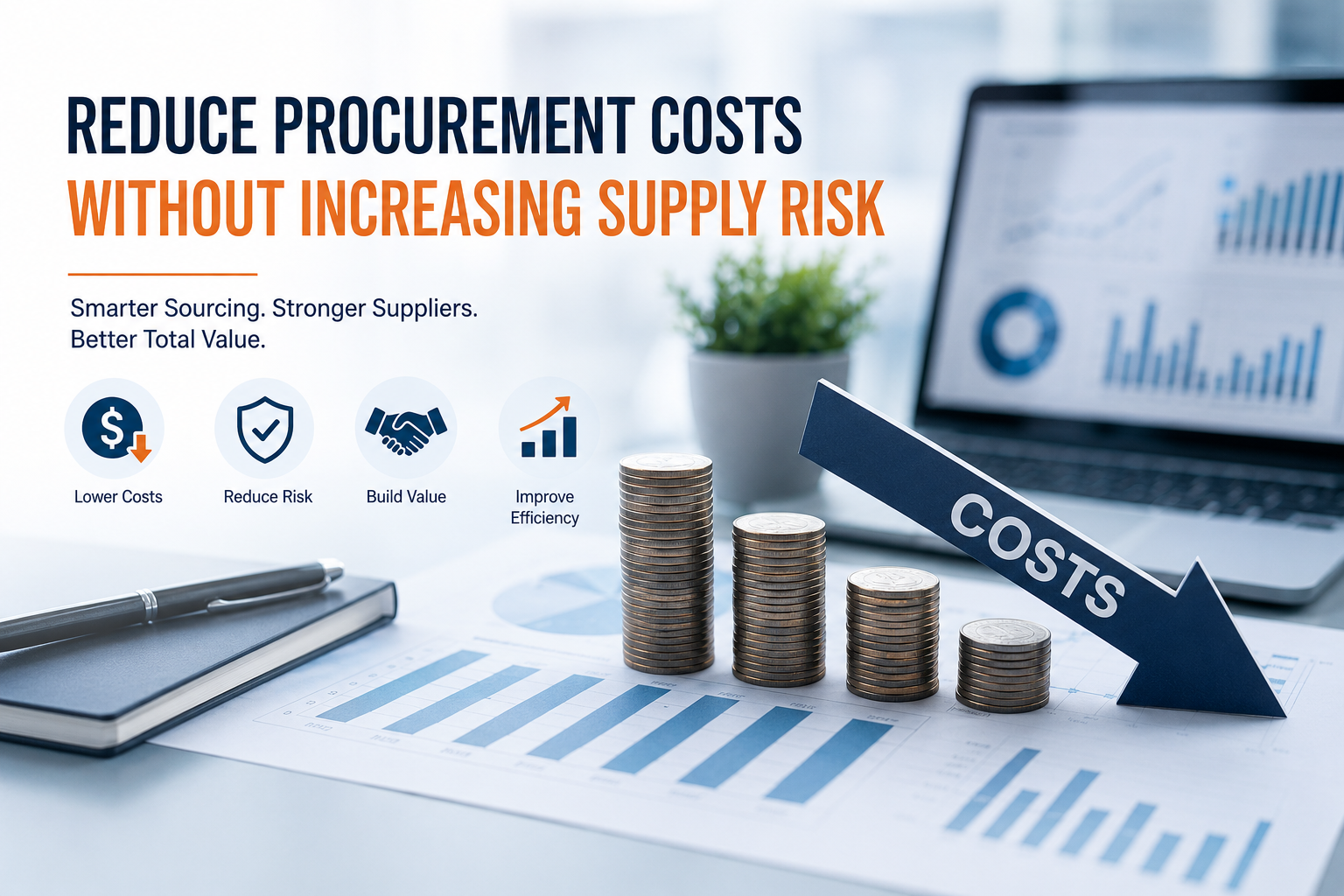
Cost reduction is one of the most important goals for procurement teams. However, reducing cost in the wrong way can create new problems, including unstable suppliers, quality issues, late deliveries, and higher long-term operating costs.
For industrial buyers, the real goal is not simply to find the lowest price. The goal is to reduce total procurement cost while maintaining quality, supply reliability, and long-term sourcing flexibility.
1. Focus on Total Cost, Not Just Unit Price
The lowest unit price does not always mean the lowest total cost. A supplier with a slightly lower price may create additional costs through poor quality, unstable lead time, excessive packaging waste, poor communication, or higher defect rates.
Procurement teams should evaluate the full cost structure, including purchase price, freight, packaging, inspection, inventory, rework, returns, and internal coordination cost.
Key idea: Sustainable cost reduction starts with total cost visibility, not simply asking suppliers for a lower price.2. Consolidate Similar Purchasing Needs
Many companies purchase similar products from multiple suppliers, departments, or locations without coordination. This often leads to fragmented demand, weaker negotiation leverage, and inconsistent specifications.
By consolidating similar purchasing needs, buyers can increase order volume, simplify supplier management, reduce repeated sourcing work, and improve pricing conditions.
3. Standardize Specifications Where Possible
Over-customized specifications can increase cost and reduce supplier flexibility. In many cases, different teams may request slightly different sizes, materials, packaging methods, or labels for similar applications.
Standardizing specifications can help reduce production complexity, improve availability, shorten lead time, and make future sourcing easier.
4. Build Long-Term Supplier Partnerships
Short-term price negotiations may deliver temporary savings, but long-term supplier partnerships usually create more sustainable value. Suppliers are more willing to support better pricing, priority capacity, and flexible service when they understand future demand.
A stable supplier relationship can also reduce communication cost, quality risk, and delivery uncertainty.
5. Use Framework Agreements for Repeated Purchases
For frequently purchased products, framework agreements can help reduce repeated quotation work and improve purchasing efficiency. They also give suppliers better demand visibility, which can support more competitive pricing.
This approach is especially useful for packaging materials, warehouse consumables, ESD supplies, security seals, industrial tapes, and other recurring procurement categories.
6. Monitor Supplier Performance
Cost reduction should not stop after an order is placed. Procurement teams should continue monitoring supplier performance, including on-time delivery, defect rate, response time, lead time, and issue resolution.
A supplier that performs consistently can reduce hidden costs and support long-term procurement efficiency.
Procurement Cost Reduction Checklist
- Compare total cost, not only unit price.
- Consolidate similar purchasing requirements.
- Standardize specifications where possible.
- Use framework agreements for repeated purchases.
- Review supplier quality and delivery performance.
- Avoid changing suppliers only for small price differences.
- Build long-term partnerships with reliable suppliers.
- Track savings together with supply risk.
How Everprosper Can Help
Everprosper helps industrial buyers reduce sourcing complexity by comparing supplier options, reviewing product specifications, and supporting practical sourcing decisions.
Instead of focusing only on unit price, we help customers evaluate product suitability, supplier reliability, lead time, packaging requirements, and long-term sourcing flexibility.
Supplier ComparisonCompare multiple sourcing options before making purchasing decisions. Specification Review
Align product requirements to avoid unnecessary cost. Recurring Supply Support
Support repeated purchases and long-term sourcing planning. Cost & Risk Balance
Help reduce cost while protecting quality and delivery reliability.
Looking for Better Sourcing Options?
Send us your product requirement, current specification, target price, or supplier reference. Everprosper can help compare sourcing options and support your cost reduction goals.
Contact Everprosper